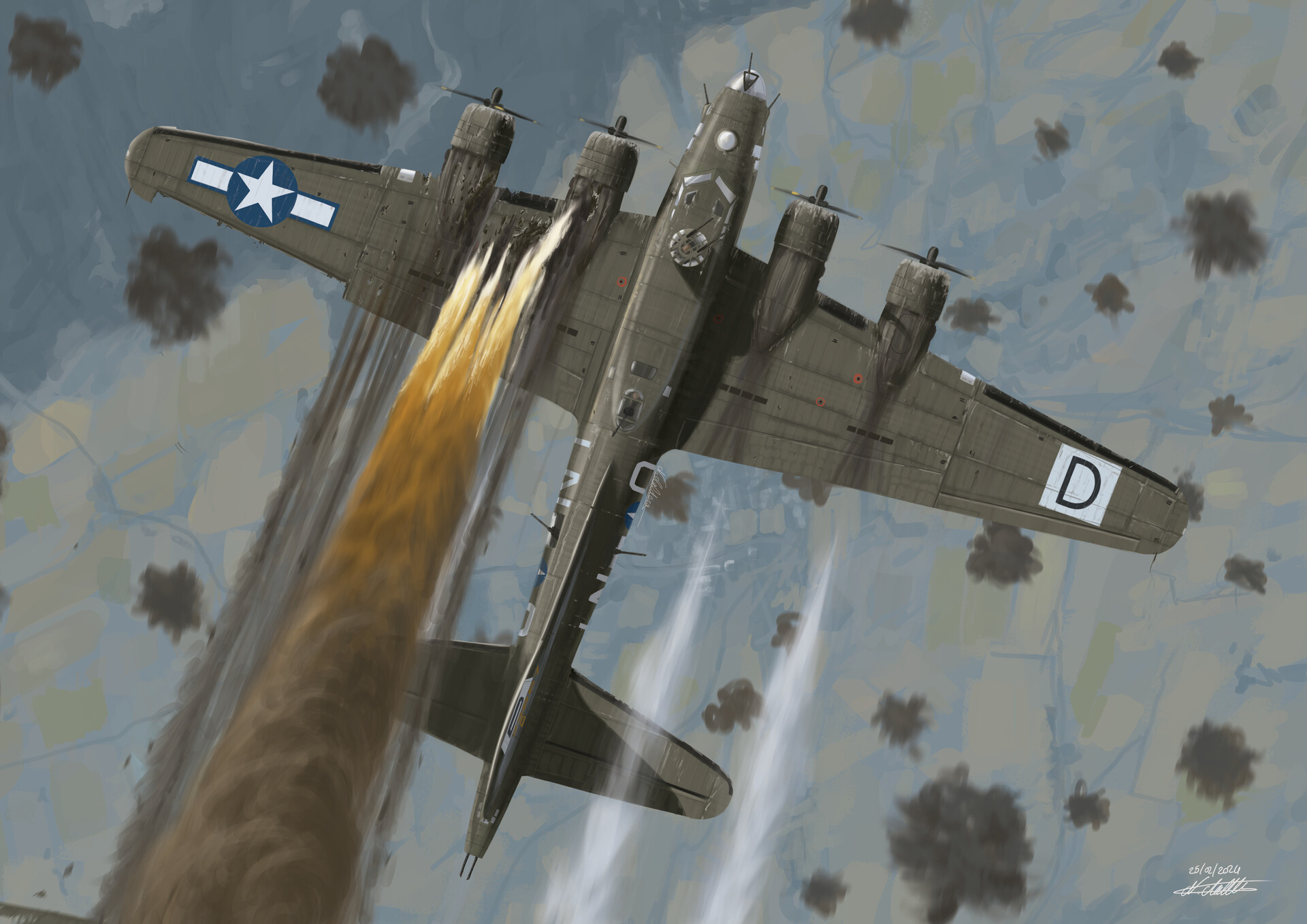
B-17F "Alice From Dallas" - Masters of The Air
Dear friends: today, let's talk B-17!
This morning I present to you an illustration created to pay homage to the excellent series “Masters of the Air” on Apple TV, which traces the history of the 8th Air Force and its bombers over occupied Europe. I have chosen here to pay tribute to the B-17F-30-VE “Alice From Dallas” (42-5867), of the 100th Bomb Group, 350th Bomb Squadron, during the first deep raid of the 8th Air Force on the Germany. On August 17, 1943, a combined force of some 376 bombers took off from its bases in England to strike Regensburg and Schweinfurt, with the aim of paralyzing German production of combat aircraft and ball bearings. The B-17 “Alice From Dallas” was part of the force of 146 B-17s tasked with bombing the Me-109 factories in Regensburg. The 100th Bomb Group occupied the *low squadron* at the rear of the formation that day. A very vulnerable place because it offers less defensive firepower than the rest of the combat boxes...
After an attack by German fighters, the B-17F “Alice From Dallas” is seriously hit on the left wing by sudden and precise fire of German Flak around 10:20 a.m., above Belgian territory. 8 of the 10 crew members had time to abandon the aircraft a few moments before it transformed into a ball of fire and crashed shortly after in Belgium, near the town of Langerloo. Two crew members were killed, while among the survivors who managed to abandon the aircraft, 4 were captured (including one in Bordeaux 8 months later) and 4 managed to escape and return to England.
The Schweinfurt-Regensburg raid marks a turning point in the doctrine of precision daylight bombing that the Americans prided themselves on. The considerable losses that day - almost 25% of the initial fleet, or 60 B-17s which were shot down or rendered unusable and around a hundred damaged - showed even its greatest defenders that the daytime raids over the Germany without fighter escorts are a bloody result. Beyond the successive improvements of the B-17 that came online, it was the introduction of the P-51 Mustang in December 1943 that would constitute a key factor in the Allies achieving air superiority in 1944, and therefore the continuation of major daytime bombing campaigns.